Agricultural yields in developing countries, particularly in Sub-Saharan Africa and South Asia, remain 30–50% below global averages, limiting income growth and food security.
In low-income countries, up to 85% of jobs are informal, meaning workers lack legal protections, social benefits, and access to finance.
Without adaptation, climate change could cause 5–15% GDP losses annually in some African economies by 2050.
Fragmented value chains, costly logistics, information gaps, and limited processing capacity prevent producers from earning fair value for their goods.
Economic migration / movement of people and the war in Ukraine have impacted the agriculture sector globally.
Traditional donors have decreased their aid commitments and USAID operations have been indefinitely suspended.
Agriculture is the primary livelihood for over 2.5 billion people globally and accounts for up to 65% of jobs in low-income countries.
Women make up 43% of the agricultural workforce, and closing the gender gap in access to resources could raise farm yields by 20–30%.
Every dollar earned in agriculture generates $0.60–$1.00 in the wider rural economy.
Expanding formal employment increases productivity, wages, and tax revenues.
Climate-smart practices reduce emissions, improve soil health, and enhance resilience.
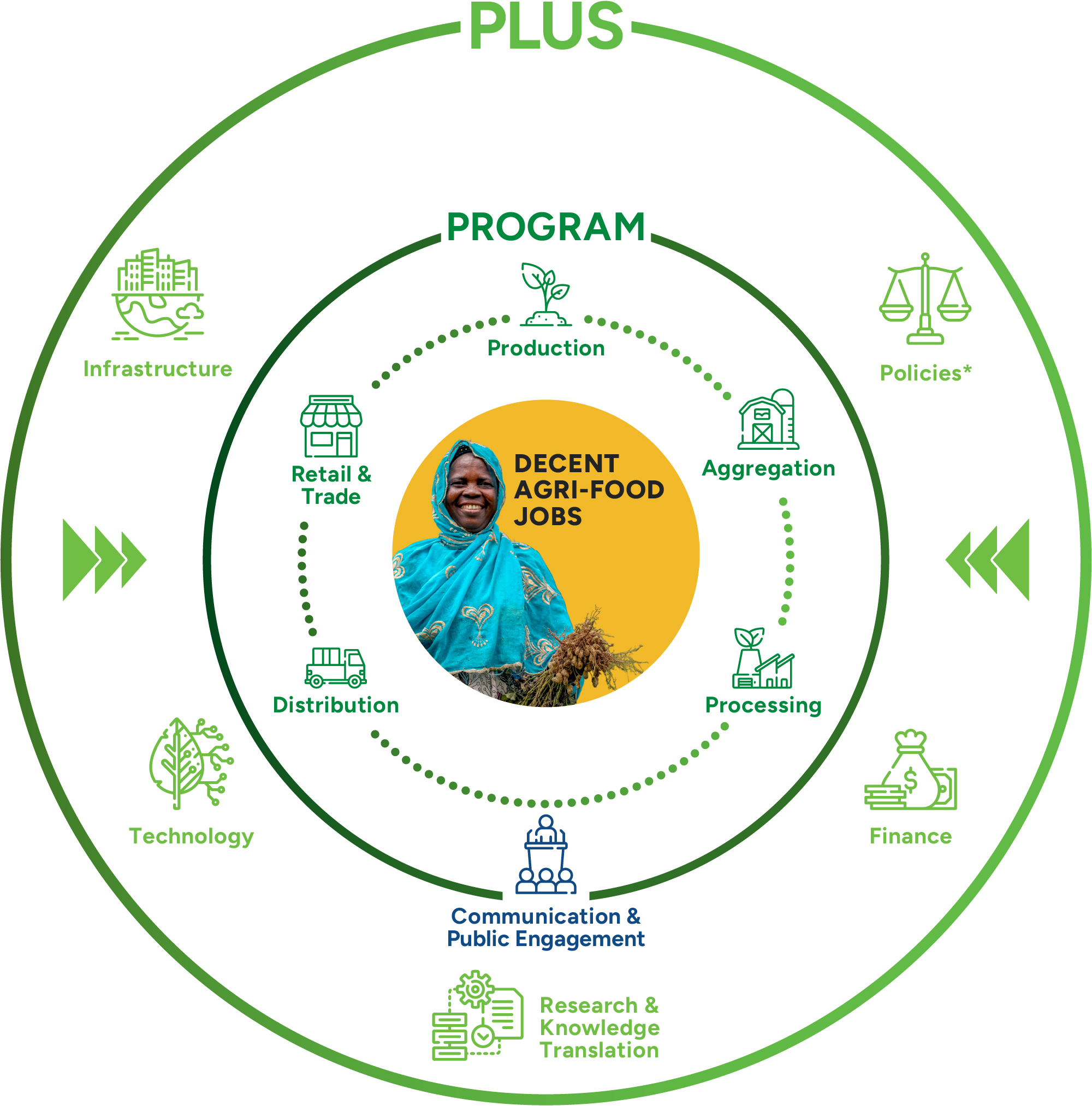
To ensure systems change, the Program needs relevant and appropriately structured additional interventions, the “Plus”. These interventions – including finance, technology, infrastructure, research, enabling policies, and more – are made possible through partnerships.
The result is multiple interventions that mutually reinforce each other, creating sustainable change that continues long after MEDA exits.
We mobilize capital strategically, blending philanthropic, commercial, and catalytic funding to drive systemic change at scale.
We collaborate with partners, co-creating solutions with communities, private enterprises, governments, and other ecosystem builders.
We rigorously measure impact, translate and share lessons, and continuously adapt to improve outcomes and deliver on our mission.
Attaining one million decent jobs will require unprecedented collaboration among communities, governments, investors, corporations, and philanthropists who believe in business solutions to poverty.
We invite you to partner in this mission with catalytic capital to grow decent work in agri-food systems, scaling proven solutions, and championing policies and practices that work.
Together, we can open new horizons, so that by 2030, one million people can work their way out of poverty with dignity and hope.